I’ve watched the digital world change a lot. One thing is clear: old ways of ranking content are disappearing. We used to focus on specific phrases to trick search engines. Now, we need to use a semantic SEO strategy to really connect with our audience.
This new approach goes beyond just matching words. It looks at the meaning behind a search, making sure your content answers what users need. By focusing on what users want, you build trust and become a leader online.
Using semantic search optimization is now a must for businesses that want to lead. I think this change is the biggest leap in modern marketing. Let’s see how you can make your content match how people think and search today.
Key Takeaways
- Search engines now prioritize the intent behind a user’s query over exact keyword matches.
- Focusing on meaning helps your content rank for broader, more relevant topics.
- Building topical authority is essential for long-term digital success.
- User experience improves when content directly answers the questions people are asking.
- Adapting to these changes ensures your brand remains visible in an evolving search environment.
Understanding Semantic SEO: A New Approach
Semantic SEO is a new way to optimize content for search engines. It focuses on the intent behind keywords. This method aims to match how search engines understand user queries, making the user experience better.
What is Semantic SEO?
Semantic SEO is a strategy that makes content rich in keywords but also meaningful. It uses NLP for SEO to grasp the language’s nuances and the intent of search queries.
This approach aims to give users more accurate and relevant search results. It does this by understanding the context of keywords, not just the keywords themselves.
The Importance of User Intent
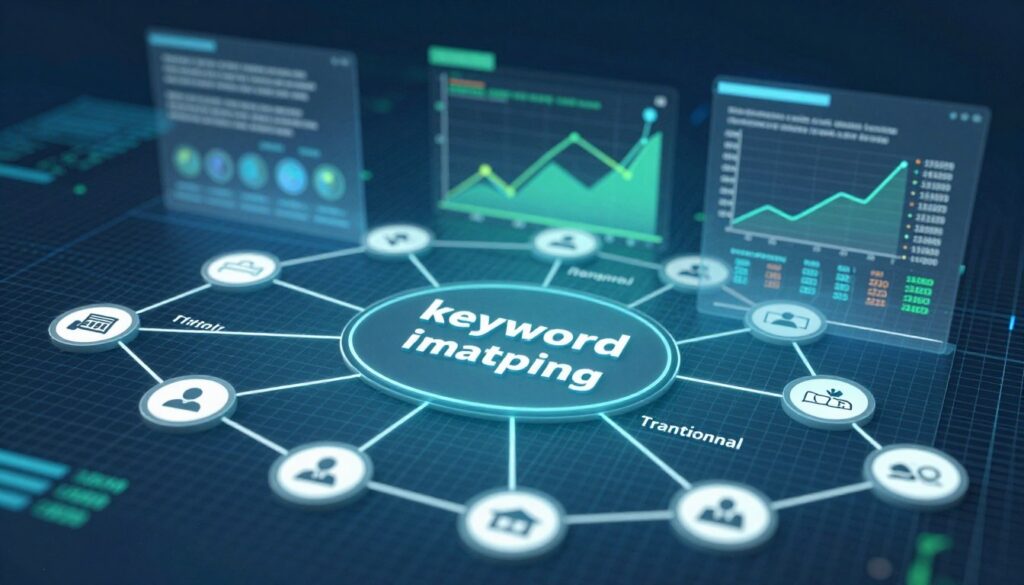
User intent is key in semantic SEO. It’s about knowing that users search for specific goals. Keyword intent mapping helps identify the intent behind certain keywords and phrases.
By matching content with user intent, businesses can get more visibility in search results. This leads to more relevant traffic to their websites.
Difference Between Traditional and Semantic SEO
Traditional SEO focuses on keyword density and backlinks. Semantic SEO, on the other hand, looks at context, user experience, and content relevance.
| Aspect | Traditional SEO | Semantic SEO |
|---|---|---|
| Focus | Keyword density and backlinks | User intent and contextual relevance |
| Content Approach | Keyword-rich content | Contextually relevant and meaningful content |
| User Experience | Often secondary to ranking factors | Primary focus, aiming to meet user needs |
As search engines evolve, using semantic SEO can help businesses stay ahead. It improves their online visibility.
Key Elements of a Semantic SEO Strategy
A successful semantic SEO strategy has key elements. These elements improve a website’s structure, content, and search engine ranking. They make sure a website is easy for search engines to find and use.
Structured Data and Schema Markup
Structured data and schema markup are key parts of a semantic SEO strategy. They add special code to a website’s HTML. This helps search engines understand the content and context of the page.
For example, a recipe website can use schema markup. It highlights cooking times, ingredients, and nutritional information. This makes the website more appealing and informative in search results.
| Schema Markup Type | Description | Example Use Case |
|---|---|---|
| Article | For news articles and blog posts | News websites, blogs |
| Product | For product information, including price and reviews | E-commerce sites |
| Event | For event details, such as date, time, and location | Event ticketing sites, conference organizers |
Contextual Relevance
Contextual relevance is very important in semantic SEO. It means how well the content on a webpage matches the user’s search query and intent. Search engines want to give users the most relevant results.
Understanding the nuances of language and the intent behind a user’s search is key. For example, a search for “best Italian restaurants” is looking for a list or reviews of Italian restaurants, not a recipe or history.
Content Interlinking
Effective content interlinking is also vital for a semantic SEO strategy. It involves linking to other relevant and useful content within your website. This enhances the user experience and helps search engines understand your site’s structure.
By interlinking content, you guide users through your website. You provide them with more information on topics related to their initial query. This improves user engagement and helps search engines crawl and index your site more efficiently.
How to Identify User Intent
Understanding user intent is key to a good semantic SEO strategy. To make content that speaks to your audience, you need to know what they want. This includes what they search for online.
Types of User Intent
User intent falls into several categories. These are informational, navigational, transactional, and commercial investigation. Knowing these types helps you make content that meets your audience’s needs.
- Informational Intent: Users looking for answers or information.
- Navigational Intent: People searching for a specific website or page.
- Transactional Intent: Users ready to buy or complete a transaction.
- Commercial Investigation: Users researching before they buy.
Research Tools for Understanding User Intent
There are tools to help you grasp user intent and improve your keywords. Google Analytics, Google Search Console, and tools like Ahrefs or SEMrush are great for this.
| Tool | Description | Benefits |
|---|---|---|
| Google Analytics | Analyzes website traffic and user behavior. | Shows how users engage and convert. |
| Google Search Console | Monitors search engine rankings and impressions. | Helps spot search queries and intent. |
| Ahrefs/SEMrush | Tools for keyword research and competitor analysis. | Give detailed keyword data and content tips. |
By using these tools and understanding user intent, you can craft a better semantic SEO plan. This plan will meet your audience’s needs.
Creating Content That Matches User Intent
Understanding and meeting user intent is key to successful semantic SEO. It’s not just about knowing what users search for. It’s also about delivering content that truly meets their needs.
Crafting High-Quality, Relevant Content
Making content that’s both high-quality and relevant is essential. Your content should be informative, engaging, and valuable to users. Focus on creating well-researched content that answers your audience’s specific needs or questions.
For example, if your audience is searching for “on-page optimization,” your content should define it and offer practical tips. This way, you establish your authority and boost user engagement.
Utilizing LSI Keywords
Using Latent Semantic Indexing (LSI) keywords is also vital. LSI keywords are related to your main keyword and help search engines understand your content’s context. For instance, if your main keyword is “semantic SEO,” related LSI keywords could be “natural language processing techniques,” “user intent,” and “content optimization.”
Adding these keywords naturally to your content makes it more relevant to search engines. This improves your content’s visibility in search results.
Importance of Content Format and Structure
The format and structure of your content are also important. Well-structured content is easier to read and more likely to be shared. Use headings, subheadings, bullet points, and short paragraphs to make your content user-friendly.
For example, an FAQ section or a how-to guide can greatly improve user experience. It provides quick answers or step-by-step instructions. This structured approach enhances user engagement and SEO performance.
The Role of Natural Language Processing in SEO
NLP techniques are changing SEO by helping search engines understand what users mean. This is key for showing the right search results and for businesses to make their content better.
Knowing how NLP and AI work in search is important for any SEO plan. I’ll dive into these topics in this section.
How Search Engines Use NLP
Search engines use NLP to get the real meaning of what users search for and what content says. They do this through several steps:
- Tokenization: They break down text into words to see their meaning and where they fit.
- Part-of-Speech Tagging: They figure out the part of speech for each word, like nouns or verbs, to grasp its role in a sentence.
- Named Entity Recognition (NER): They spot named entities like people, places, and companies to give more precise search results.
- Dependency Parsing: They look at how words in a sentence relate to each other to understand the sentence’s structure.
By using these NLP steps, search engines can better match what users are looking for with the right content.
Impact of AI on Semantic Search
AI has made semantic search much better by working with NLP. AI can learn from lots of data, making it smarter at answering complex questions.
AI’s effects on semantic search include:
- Improved Contextual Understanding: AI helps search engines get the context of content right, leading to better search results.
- Enhanced User Experience: By giving more precise and relevant results, AI-driven search makes users happier.
- Better Handling of Ambiguity: AI helps search engines deal with unclear queries by grasping the subtleties of language and what users really want.
As AI keeps getting better, its role in semantic search will only grow, changing SEO even more.
Technical SEO Considerations for Semantic Strategy
A good semantic SEO strategy needs several technical steps. These steps help search engines understand and rank your site better. They also make your site easier for users to navigate.
Site Speed and Performance
How fast your site loads is key for both users and search engines. A slow site can make people leave quickly. To make your site faster, try these tips:
- Optimize images by compressing them without losing quality.
- Minify CSS, JavaScript, and HTML files to make them smaller.
- Use browser caching to keep often-used resources local.
- Put your content on a Content Delivery Network (CDN) to reach more people.

Ensuring Mobile-Friendliness
Most people use mobile devices to visit websites. So, making sure your site works well on phones is a must. A good mobile site adjusts to different screens and sizes. It makes browsing easy and fast.
- Use a responsive design that changes with screen size and orientation.
- Make sure navigation and text are clear on smaller screens.
- Ensure your site loads quickly on phones.
SSL Certificates and User Trust
SSL certificates are vital for keeping user data safe and building trust. Google also favors sites with SSL certificates. Here’s how to get one:
- Get an SSL certificate from a trusted Certificate Authority (CA).
- Install the SSL certificate on your server.
- Switch your site to use HTTPS instead of HTTP.
By improving your site’s technical SEO, you can boost its performance and user experience. This will help your semantic SEO strategy a lot.
Measuring the Success of Your Semantic SEO Strategy
A good semantic SEO strategy needs constant checking to see if it’s working. To do this right, you must pick and watch the right numbers.
Seeing how well your SEO works means checking if your content matches what users want. It also means seeing how it does in search results. You need both tech SEO skills and knowing how people act online.
Key Performance Indicators (KPIs) to Track
To see if your semantic SEO strategy is working, look at these KPIs:
- Organic Traffic: Watch how much organic traffic your site gets. This shows if your content is ranking well in search results.
- Search Engine Rankings: Keep an eye on your rankings for key words. This shows how your content is doing in search results pages (SERPs).
- Click-Through Rate (CTR): Check CTR to see if your title tags and meta descriptions are drawing people in.
- Conversion Rate: Look at the percentage of visitors who do what you want them to, like buying something or filling out a form.
- Bounce Rate: See if your content is what users expect by checking the bounce rate.
By watching these KPIs, you can see how well your semantic SEO strategy is doing. You can also find ways to get better.
Tools for Monitoring Success
Many tools can help you see how well your semantic SEO strategy is doing. Some top ones are:
- Google Analytics: Gives you info on organic traffic, bounce rates, and conversion rates.
- Google Search Console: Shows data on search engine rankings, impressions, and CTR.
- SEMrush: Helps with keyword tracking, checking out competitors, and doing technical SEO audits.
- Ahrefs: Good for looking at backlinks, researching keywords, and improving content.
By using these tools and watching the right KPIs, you can make your semantic SEO strategy better. This will help you be more visible online.
Case Studies: Brands Successfully Implementing Semantic SEO
Let’s look at real examples of brands that used semantic SEO well. These case studies show how it boosts online presence and attracts more visitors. They help us understand how to use semantic search optimization effectively.
E-commerce Site Success Story
An e-commerce site for outdoor gear is a great example. They used structured data markup to rank higher in search engines. This made their site more useful for users, leading to more visitors and sales.
The site worked hard on its semantic SEO. They optimized product descriptions, added schema markup for reviews, and created content that matched what users were looking for. This effort paid off with a 25% increase in conversions and a 50% increase in organic traffic in just six months.
| Metric | Before Semantic SEO | After Semantic SEO |
|---|---|---|
| Organic Traffic | 10,000 | 15,000 |
| Conversions | 2% | 2.5% |
Blogging Platform Example
A well-known blogging platform also saw big benefits from semantic SEO. They focused on creating valuable content that matched what users wanted. They also used Latent Semantic Indexing (LSI) keywords to make their content more relevant.
This approach led to a 30% increase in average session duration and a 20% decrease in bounce rates. Their rankings improved, bringing a 40% increase in organic traffic in three months.
Key Takeaways from Each Case
The success of these brands shows the power of semantic SEO. Key points include the need for high-quality, relevant content, structured data markup, and understanding user intent.
By using these strategies, brands can get more visibility online, attract more targeted visitors, and boost sales and conversions.
Future Trends in Semantic SEO
As we look ahead, semantic SEO is growing, thanks to better natural language processing and NLP for SEO. The future of SEO is about keeping up with these changes.
Voice Search Impact
Voice search is changing how we talk to search engines. With more virtual assistants, making your site voice-friendly is key. Use natural language and long-tail keywords that sound like real speech.
Changing User Behaviors
User habits are always changing, and semantic SEO needs to keep up. As people get used to voice search and AI, their search expectations will change too.
Hyper-Personalization
Hyper-personalization is another big trend. Search engines are getting better at knowing what each user likes. Businesses need to tailor their content to meet these unique needs. Using NLP for SEO helps create more targeted strategies.